- About Integrated Farm Management
- Our LEAF Network of Demonstration Farms & Innovation Centres
- Resources
- LEAF Sustainable Farming Review
- LEAF Endorsed Advisors & Consultants
- Our Projects & Partnerships
- Nature Based Solutions to Climate Change
- Beacons of Excellence
- Resilient & Ready
- Accelerating & Demonstrating the Journey to Net-Zero
- The Regen Academy
LEAF Conference 2026
29th Jan 2026
New Frontiers: Regenerative Agriculture, the Power of Public Engagement and the Data Revolution

New Frontiers: Regenerative Agriculture, the Power of Public Engagement and the Data Revolution
Date: Thursday 29 January 2026
Time: 10:00 - 16:00 GMT
Location: BNP Paribas, London
Chair: Tom Heap, BBC Journalist and Author
The LEAF Conference brought together leading farmers, scientists, policy makers, technologists, and food system thinkers for a powerful day exploring the shifts reshaping our sector. Across three focused panels, we examined whether regenerative farming represents a revolution, an evolution or a deeper cultural transition; we delved into how public engagement can drive meaningful change in human and planetary health; and we uncovered the transformative potential of high-quality data - its capacity, the culture needed to use it well, and the change it can unlock. Together, these conversations chart the emerging frontiers that will define a more resilient, connected and more sustainable future for global food and farming systems.
Our Keynote Speakers:
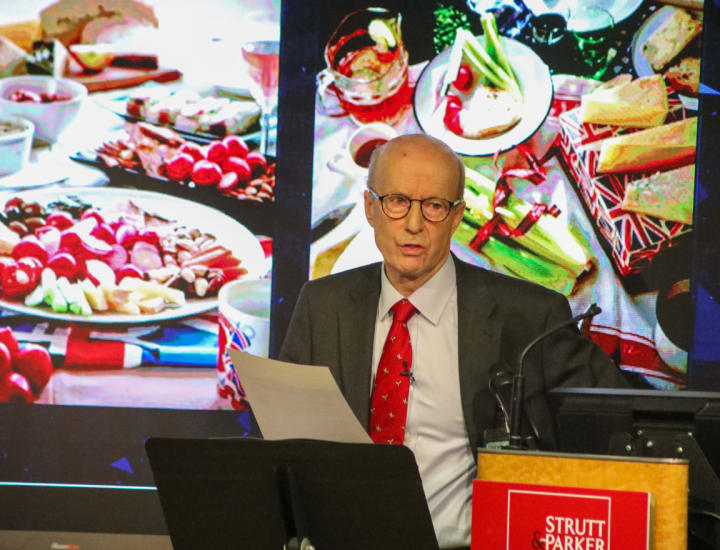
John Shropshire OBE DL FRAgS
Chairman, G's Fresh Group
Our first keynote urged policymakers and government bodies to take a long-term view of food production in order to stimulate farmer investment.
“We are here to care for the land and leave it in a better state than we found it, while also feeding the nation"
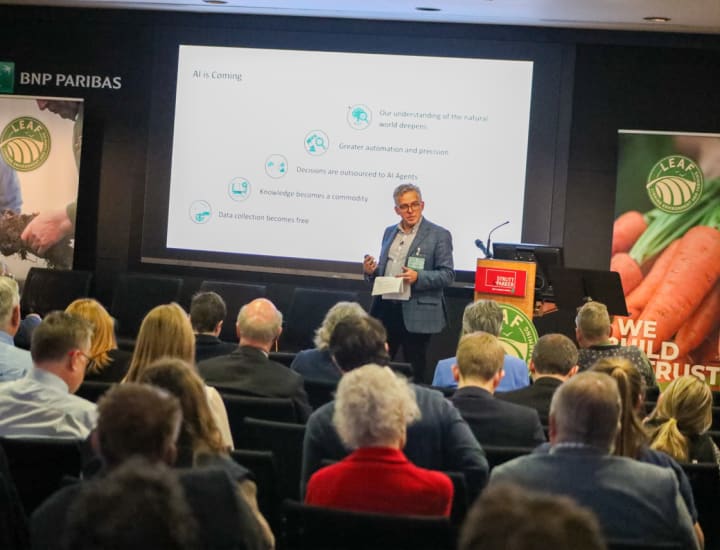
Dr Elliott Grant
CEO, Mineral & Visiting Fellow, University of Cambridge Institute for Manufacturing
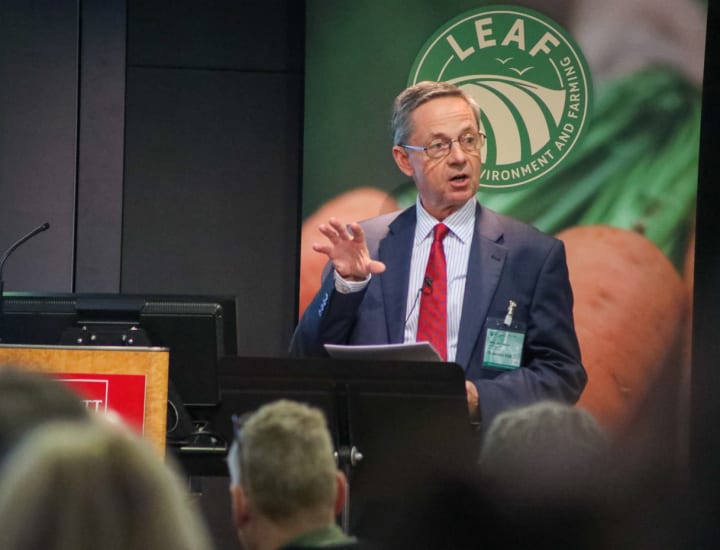
Artificial intelligence (AI) would reshape food systems over the next century, but we were only at the start of the journey. That was the message from Dr Elliott Grant, our second keynote. Whilst admitting that it was almost impossible to predict what it would look like at this early stage of AI adoption, he said:
“AI can help in building a better food system for all of us”
The conference focused on three broad themes:
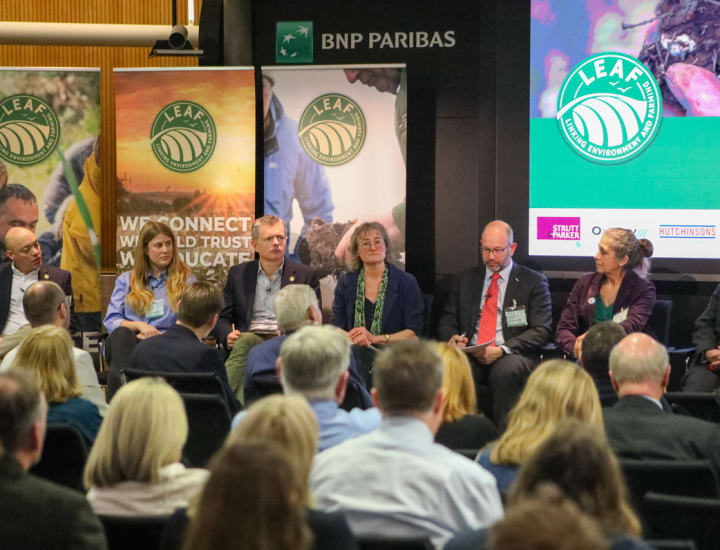
Panel 1:
Regenerative Farming - Revolution, Evolution or Cultural Transition?
This panel explored the practical realities of regenerative agriculture - both in the UK and internationally - and the benefits it can bring to farm businesses within an Integrated Farm Management (IFM) approach. Speakers discussed how these techniques are being applied on the ground, the operational and environmental gains they offer, and the mindset shifts that support successful transition, recognising the role of farmers’ motivations, experience, and autonomy in driving change.
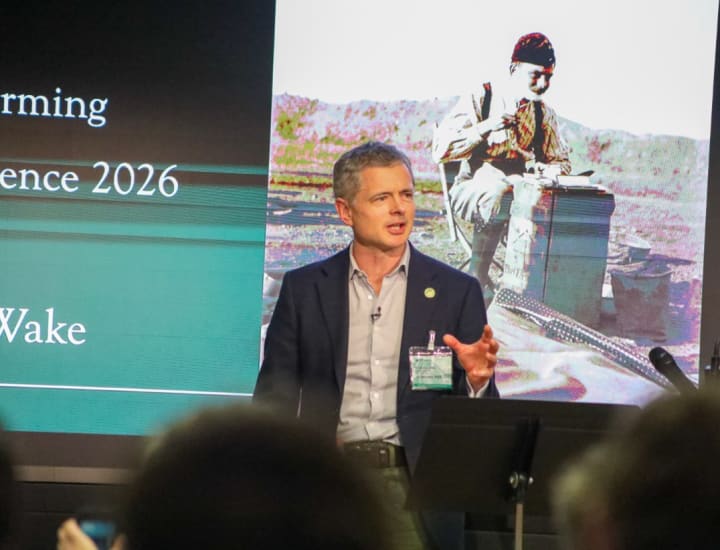
The event saw the launch of LEAF’s Regen Academy, which will allow resources and insight to be shared for those looking to make the transition to regenerative farming. Dr Johnny Wake, managing partner at Courteenhall Farms and a longstanding advocate for regenerative practices, said regenerative farming not only made his land more resilient, but allowed his business to be more financially resilient at the same time.
Enabling farmers to be the drivers of regenerative change was key, with Overbury Enterprises’ Jake Freestone saying that ‘farmers learn best from farmers’, and he welcomed this as a key strand of the Regen Academy. Meanwhile, Prof Janet Dwyer of the University of Gloucestershire said regen was about ‘bringing science back to the practitioners’. “It’s not environment versus farming, it’s about the two working together,” she urged.
Panel 2:
Forging Connections - the Role of Public Engagement in Farming, Food & Health.
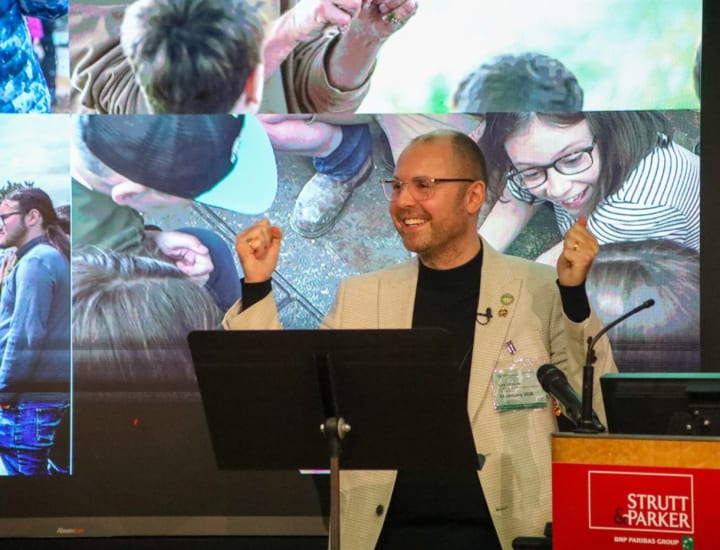
As we prepare to celebrate 20 years of Open Farm Sunday in 2026, this panel looked at the powerful role of public engagement in helping communities understand where their food comes from, how it's grown, and why it matters. We examined the drivers needed to rebuild trust in food systems to deepen public understanding and inspire more informed, sustainable choices.
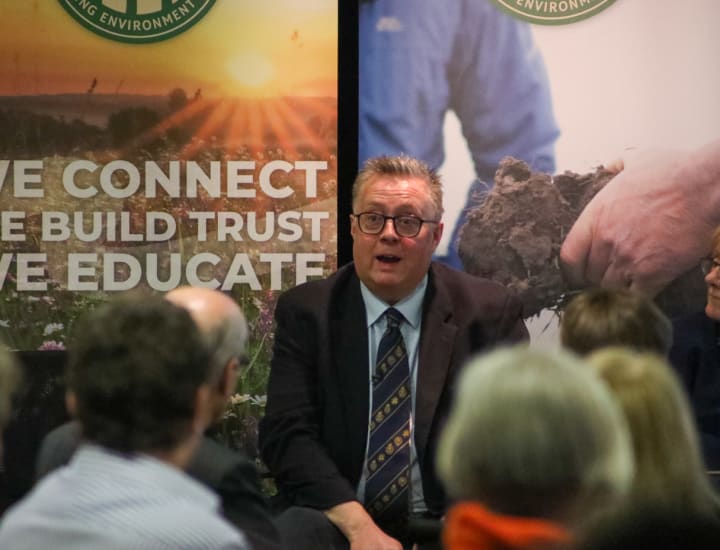
RASE’s Christine Knipe said that ‘young people want to learn about what we do and how we do it’, while LEAF’s Carl Edwards said getting people on real, working farms is key to engagement. “It’s not about showcasing perfection, it’s about credibility,” he said. It was announced that LEAF and LANTRA will co-develop Integrated Farm Management courses that equip the next generation with the skills to drive more resilient and sustainable farming systems, meeting both student and employer needs.
OFS farmer Michael Sly gave an impassioned overview of the benefits of the event. Starting with just 12 people visiting his Cambridgeshire farm in 2006, Michael hosted a truly remarkable 12,000 people over the weekend in 2025. And he said that enjoyment was at the heart of what he sought to do - “People learn best when they are genuinely having fun."
Panel 3:
Beautiful Data - Capacity, Culture & Change.
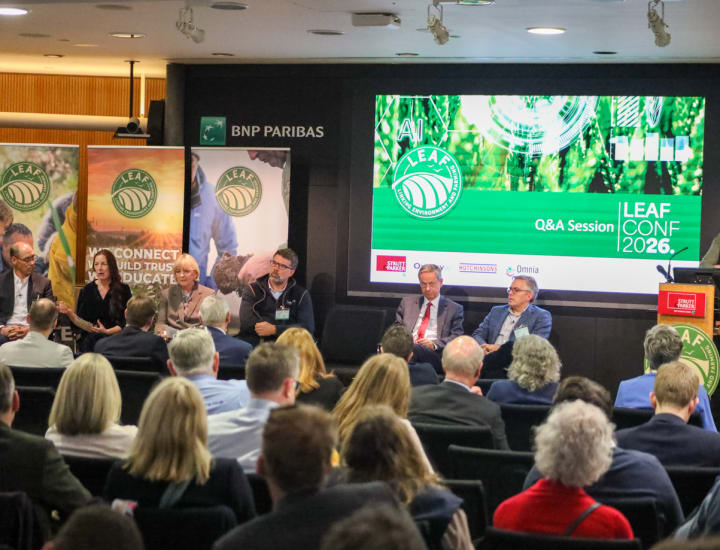
This session explored the critical role of data and digital tools in accelerating sustainable agriculture at a global scale. From AI-driven analytics to real-time on-farm monitoring, data holds enormous promise, we questioned: how do we bridge the gap between potential and practical application, ensuring that insights translate into real, meaningful change on the ground?
Panellists considered the growing role of data and technology in supporting better decision-making on farm. LEAF went on to announce a three-year research project with Hutchinsons, in partnership with academics at the University of Cambridge, which will focus on improving agricultural performance through AI-driven advice to deliver profitable, productive and environmentally restorative farming.
Catch up now:
Thank you to our Panellists:
Professor Janet Dwyer, Professor of Rural Policy, Countryside and Community Research Institute, at the University of Gloucestershire
Jake Freestone, Farm Manager, Overbury Enterprises, LEAF Demonstration Farmer & LEAF Trustee
Lucy Harler, Future Farming Manager, G’s Group
Dan Stevenson BVSc MSc, Head of Sustainable Farming, LEAF
Dr Tom Pearson, Regenerative farmer in West Cambridgeshire
Professor Carol Wagstaff, Pro Vice Chancellor for Research (Agriculture, Food and Health), University of Reading
Dr Johnny Wake, Managing Partner at Courteenhall Farms & LEAF Trustee
Nick Evans, Co-founder and Managing Director, Oxbury Bank
Judith Batchelar OBE, Founder, Food Matters International Ltd
Carl Edwards, Director of Communication, Engagement and Education, LEAF
David Farrell, CEO and founding partner of Blue North Sustainability
Clare Mike, Director, LEAF Marque and International Development
Dr Tara Garnett, Director of Table, University of Oxford
David Hutchinson, Chairman, Hutchinson Group & Director HL Hutchinson Ltd
Christine Knipe, Experience Director, RASE
Michael Sly MBE, Partner and Farms Director, Park Farm
Thank you to our sponsors:
